Quick start: .NET
Start a session on a device, launch Settings, tap a row, take a screenshot, and quit — from .NET. Starts with Device.Builder().Platform(...).App(...).Start(); ends with device.Quit(), or leaving the using block.
Before this page: install mobium and prepare a device.
1. What you need
The .NET SDK 8 or later. The package targets netstandard2.0, so it also runs on .NET Framework 4.6.1+.
2. Install the client
Not on NuGet yet. Until the first release it installs from a local package built from a clone; after it, dotnet add package Mobium needs nothing else.
git clone https://github.com/mobiumdev/mobium.git ~/mobium
dotnet pack ~/mobium/clients/dotnet/Mobium -o ~/mobium-packages
dotnet new console -o quickstart && cd quickstart
dotnet add package Mobium --version 0.1.0 --source ~/mobium-packages
3. The code
Save this as Program.cs in the project folder, replacing the one dotnet new generated — it is examples/dotnet/Program.cs.
// Mobium quick start: start a session, drive Settings, quit.
//
//   MOBIUM_PLATFORM=android dotnet run    # or ios
using System;
using System.Collections.Generic;
using System.Linq;
using Mobium;

// Settings is on every emulator, simulator and phone, with nothing to install.
var platforms = new Dictionary<string, (string App, string Row, string Next)>
{
    ["android"] = ("com.android.settings", "Network & internet", "text=Airplane mode"),
    ["ios"] = ("com.apple.Preferences", "General", "label=About,role=button"),
};
var platform = Environment.GetEnvironmentVariable("MOBIUM_PLATFORM") ?? "android";
var p = platforms[platform];

var builder = Device.Builder().Platform(platform).App(p.App);
var serial = Environment.GetEnvironmentVariable("MOBIUM_DEVICE");
if (serial != null) builder.OnDevice(serial);

// 1. Start the session: the driver is started on the device and Settings is
//    launched. The using block quits when it ends, even on an exception.
using (var device = builder.Start())
{
    var s = device.Session!;
    Console.WriteLine($"session on {s.Device} ({s.Platform}, {s.Driver})");

    // 2. Map the screen: every element you can act on, each with a @ref.
    var elements = device.Map();
    foreach (var e in elements.Take(5)) Console.WriteLine("  " + e);

    // 3. Tap a row by its ref, then wait for the screen it opens. A row's
    //    label can carry its summary too ("Network & internet Mobile, Wi-Fi,
    //    ..."), so match its start.
    var row = elements.First(e => e.Label.StartsWith(p.Row, StringComparison.Ordinal));
    device.Tap(row.Ref);
    device.WaitFor(p.Next);
    Console.WriteLine($"opened {p.Row}");

    // 4. Take a screenshot.
    device.Screenshot($"quickstart-{platform}.png");
    Console.WriteLine($"saved quickstart-{platform}.png");
}
// 5. The using block has quit: the device's session is closed.
Console.WriteLine("session ended");
Settings is on every Android and iOS device with nothing to install. The row and the screen after it are the only things that differ by platform.
4. Run it
Android
MOBIUM_PLATFORM=android dotnet run
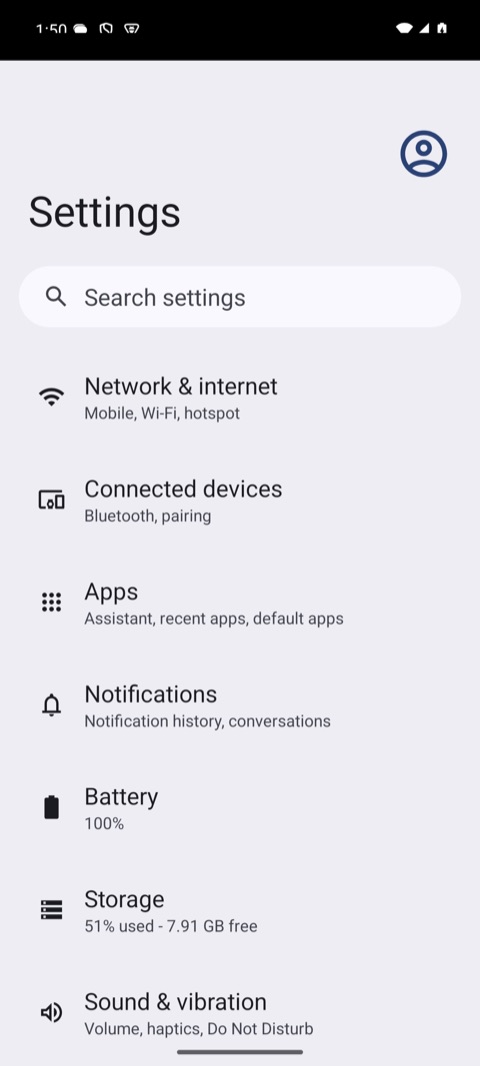
What it printed on an Android 15 emulator:
waiting for the UiAutomator2 server to start...
session on emulator-5554 (android, uiautomator2)
  @e1 settings_homepage_container (list)
  @e2 Profile picture, double tap to open Google Account (button)
  @e3 Search settings (button)
  @e4 main_content_scrollable_container (list)
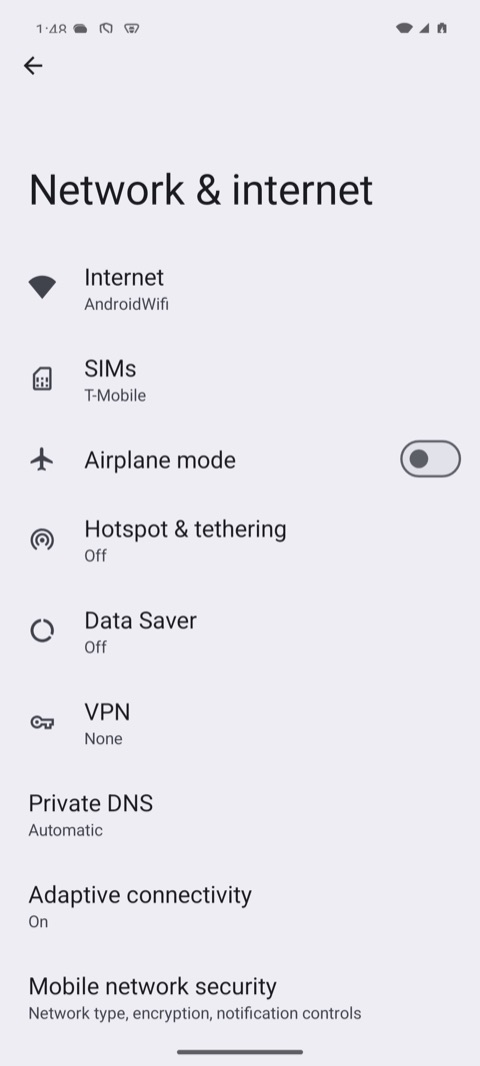
  @e5 Network & internet Mobile, Wi‑Fi, hotspot (button)
opened Network & internet
saved quickstart-android.png
session ended
| After start | After the tap |
|---|---|
 |  |
iOS
MOBIUM_PLATFORM=ios dotnet run
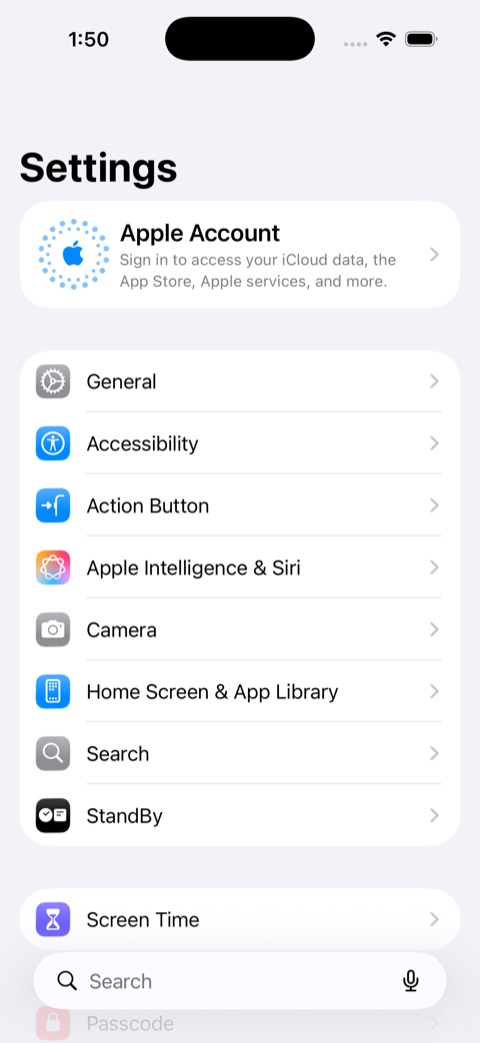
What it printed on an iOS 26.5 simulator:
waiting for WebDriverAgent to start...
session on 457C7DC2-C706-45D9-8D68-1D26953E28B1 (ios, wda)
  @e1 Apple Account, Sign in to access your iCloud data, the App Store, Apple services, and more. (button)
  @e2 General (button)
  @e3 Accessibility (button)
  @e4 Action Button (button)
  @e5 Apple Intelligence & Siri (button)
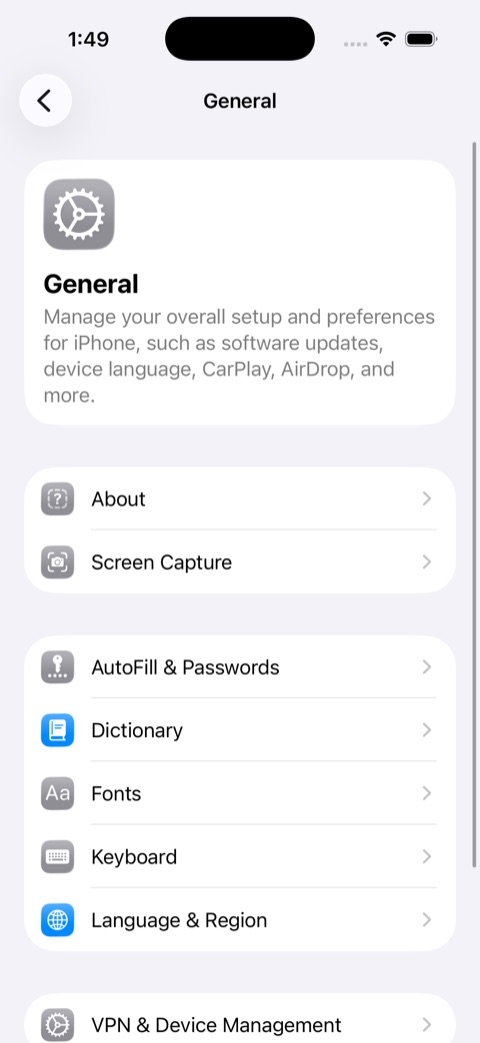
opened General
saved quickstart-ios.png
session ended
| After start | After the tap |
|---|---|
 |  |
The first start on a device is slow: it installs the UiAutomator2 server on Android, and on a real iPhone builds WebDriverAgent. Later starts take seconds.
Notes
- A
usingblock aroundStart()quits when it ends, even on an exception. AroundConnect()it only closes the connection. - With more than one device of the session's platform running — two Android devices, or two among the booted simulators and attached iPhones —
startrefuses to guess and lists them. One Android device and one iOS device are not ambiguous: the platform picks. Name one withMOBIUM_DEVICE=<serial or UDID>, which the example passes on as the device.
Next: the rest of the tool surface, and setting up phones and simulators. Changing the client itself? DEVELOPMENT.md is the contributor's guide.