Tap · TapPoint · DoubleTap · DoubleTapPoint · TapFingers
This tool on every surface: CLI · MCP · Python · JavaScript · Go · Java · .NET
Tap an element. These call app_tap.
Tap
func (d *Device) Tap(ctx context.Context, target string) error
Tap taps a ref ("@e5") or a locator ("text=Sign In").
The element is re-resolved immediately before the tap, and the tap scrolls to it first if it is below the fold.
TapPoint
func (d *Device) TapPoint(ctx context.Context, x, y int) error
TapPoint taps a point in device pixels.
DoubleTap
func (d *Device) DoubleTap(ctx context.Context, target string) error
DoubleTap taps an element twice, close enough together that the platform reads one gesture rather than two taps.
The same tool as Tap with one argument set, so the target is resolved the same way and refused the same way when the screen has moved. The uiautomator dump driver refuses it: nothing there controls the interval.
DoubleTapPoint
func (d *Device) DoubleTapPoint(ctx context.Context, x, y int) error
DoubleTapPoint double-taps a point in device pixels.
TapFingers
func (d *Device) TapFingers(ctx context.Context, target string, fingers int) error
TapFingers taps an element with several fingers at once, side by side — a two-finger tap with 2, a three-finger tap with 3 (up to 5). On iOS three fingers can reach the system instead of the app: three-finger gestures are undo, redo, copy and paste there.
Examples
Tap an element by its visible text
if err := dev.Tap(ctx, "text=Network & internet"); err != nil {
	return err
}
The same call from the command line, mobium tap "text=Network & internet", printed on an Android 15 emulator:
tapped text=Network & internet at (407, 867)
| Before | After |
|---|---|
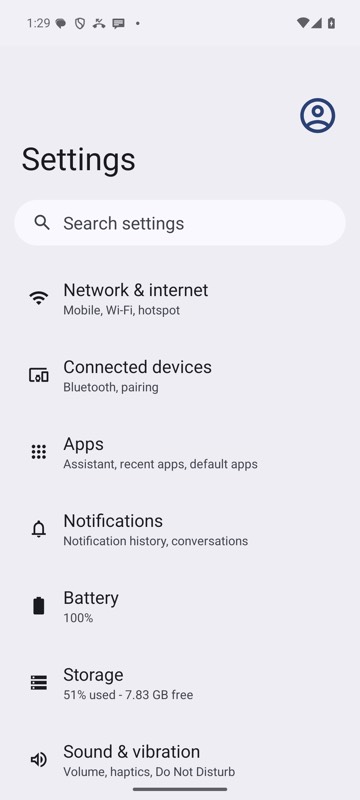 | 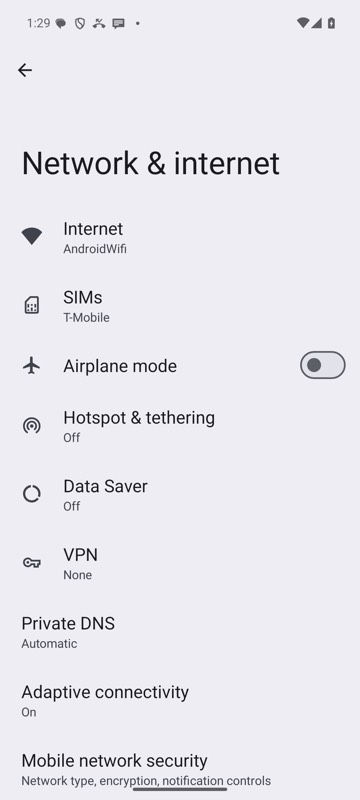 |
mobium tap "text=Network & internet" on an Android 15 emulator
Tap a ref from the last map
if err := dev.Tap(ctx, "@e2"); err != nil {
	return err
}
Double-tap
if err := dev.DoubleTap(ctx, "@e2"); err != nil {
	return err
}
Tap right after work the screen does not show, with the gray box on
if err := dev.LaunchWithGrayBox(ctx, "dev.mobium.mobiumapp"); err != nil {
	return err
}
if err := dev.Tap(ctx, "testid=busyQuiet"); err != nil {
	return err
}
// Waits for the app to say it is idle.
if err := dev.Tap(ctx, "testid=busyRowB"); err != nil {
	return err
}
The same call from the command line, mobium tap testid=busyRowB, printed on an Android 15 emulator:
tapped testid=busyRowB at (540, 1095)
gray box: waited 307 ms for the app to go idle (busy: quiet)
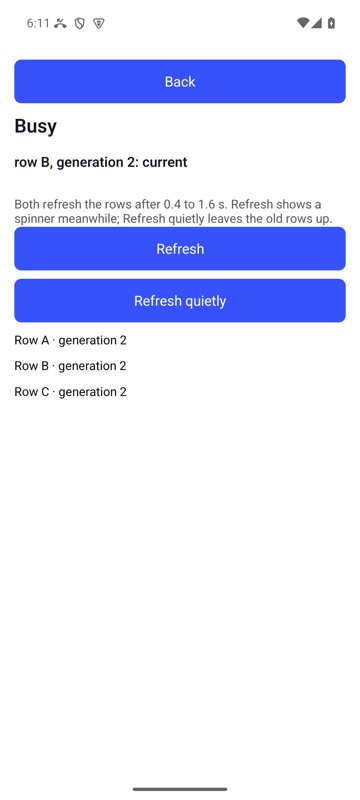
mobium tap testid=busyRowB on MobiumApp's Busy Demo, Android 15 emulator, launched with --gray-box: the tap waited for the quiet refresh to finish, and Row B is the new generation's
On a device
| Before | After |
|---|---|
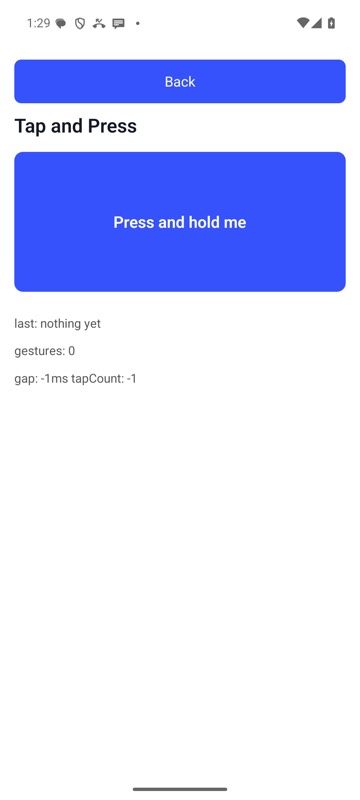 | 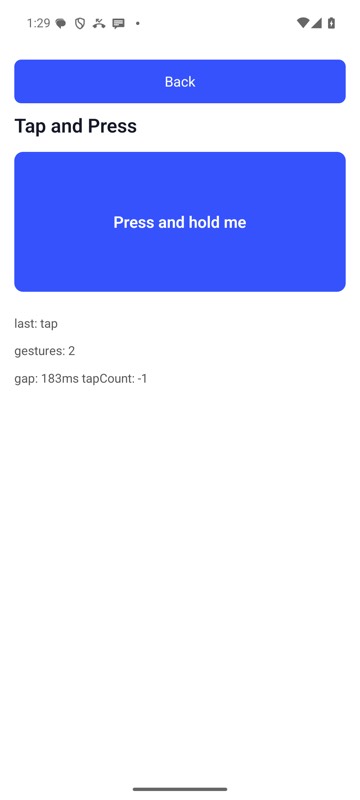 |
mobium double-tap testid=pressTarget on an Android 15 emulator